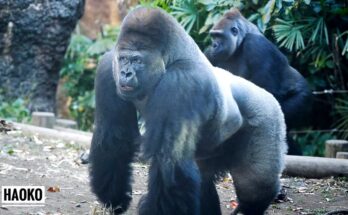
In the early moments before snack‑time at Chiba Zoo, the gorillas gather not for play, but in quiet anticipation. Watching them closely, one sees a subtle ritual unfold — each individual settling into a moment of calm hope.
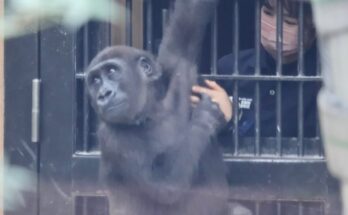
Some sit patiently near the mesh gate, their eyes fixed on the keeper’s area, as if expecting a familiar hand and a familiar reward. Others move slowly between perches or grass patches, sometimes shifting position, but always alert — aware of the approaching treat. Their body language speaks volumes: a tilted head, occasional subtle shifts, and a stillness that conveys both readiness and restraint.
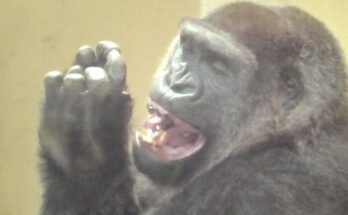
Then, the moment arrives. Keepers appear. A few low grunts — a signal the gorillas seem to recognize — ripple through the group. As the snacks are delivered, there is a shift: excitement mixed with respect. A gorilla may rise, stretch, or take a cautious step forward. Hands extend, fingers wrap around hay or fresh branches, and the wait ends.
This daily ritual is telling: even in captivity, gorillas retain natural rhythms and behaviors. Snack time is not just about feeding — it’s a moment of social cohesion, recognition, and trust between animals and their caregivers. For the gorillas, it seems to be a small reward — but for observers, it’s a sweet reminder that these majestic creatures deserve care, patience, and respect.